
CO2 Cryo Fog And Smoke Effects: Atmospheric Applications And Their Limits
CO2 Cryo Fog And Smoke Effects: Atmospheric Applications And Their Limits
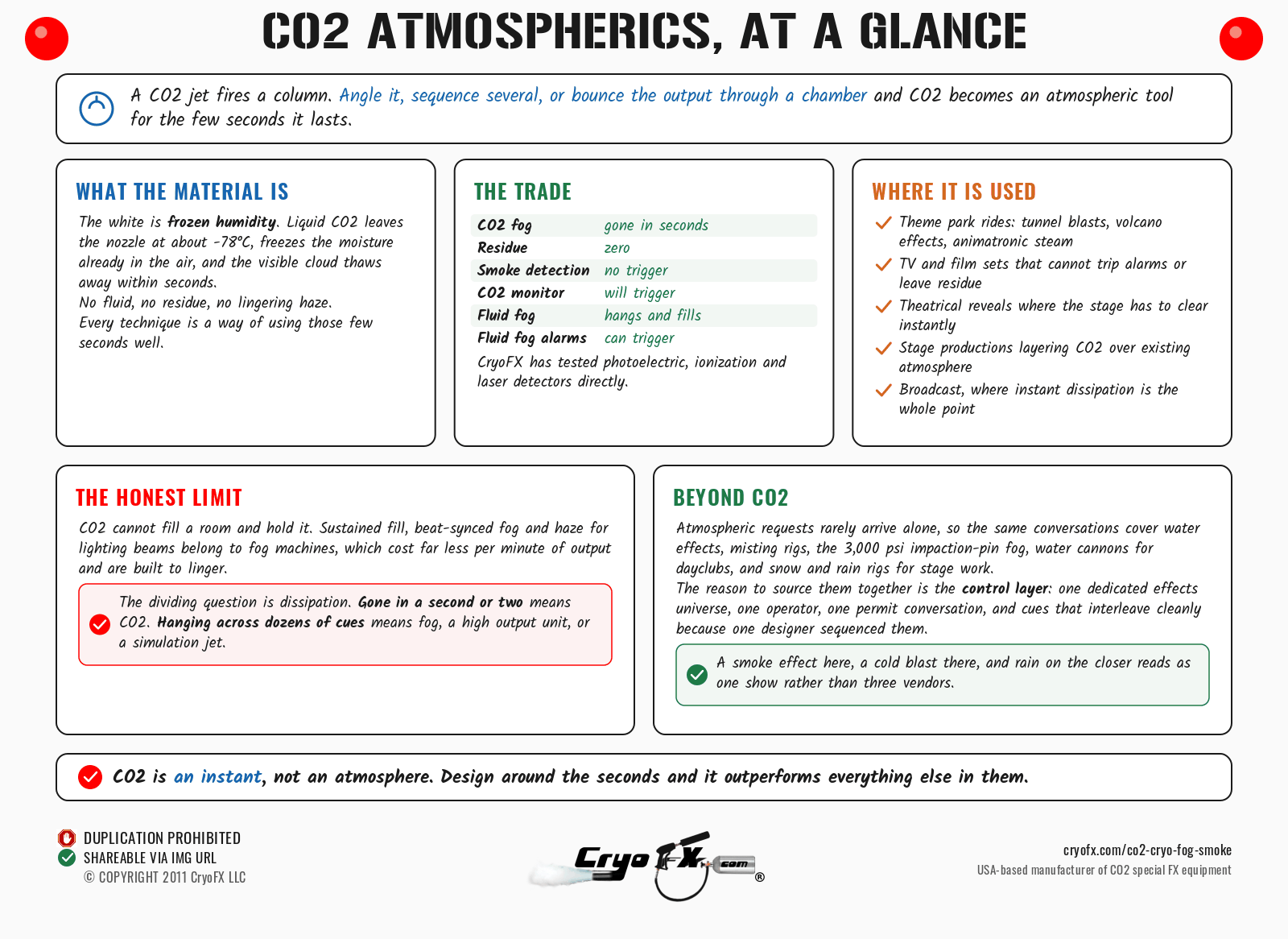
A CO2 jet fires a column. Angle that column, sequence several of them, or bounce the output through a chamber, and CO2 becomes an atmospheric tool: low-lying fog looks, rolling clouds, steam off a prop, a smoke effect that reads on camera and then vanishes before the next take. The techniques below are how CryoFX gets atmosphere out of CO2, along with the boundary where CO2 stops being the right tool and a fog machine takes over.
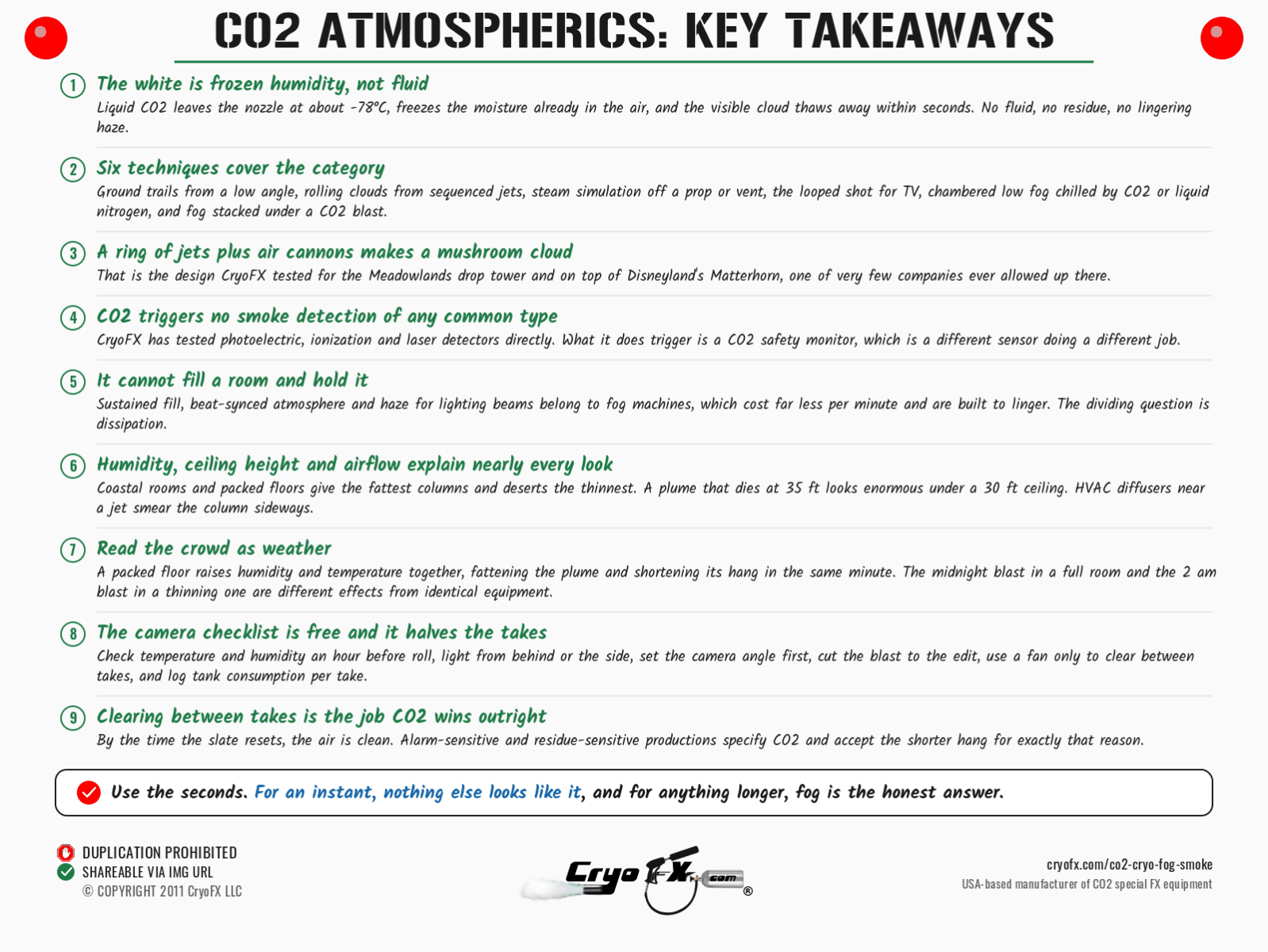
First, what the material is. The white is frozen humidity: liquid carbon dioxide leaves the nozzle at about -78°C, freezes the moisture in the air, and the visible cloud thaws away within seconds. The trade sits right there: CO2 fog dissipates almost instantly, leaves zero residue, and triggers no smoke detection (CryoFX has tested photoelectric, ionization, and laser detectors directly). Fluid fog hangs, fills, and lingers, and can set off alarms. Every technique below is a way of using those few seconds well.
The techniques
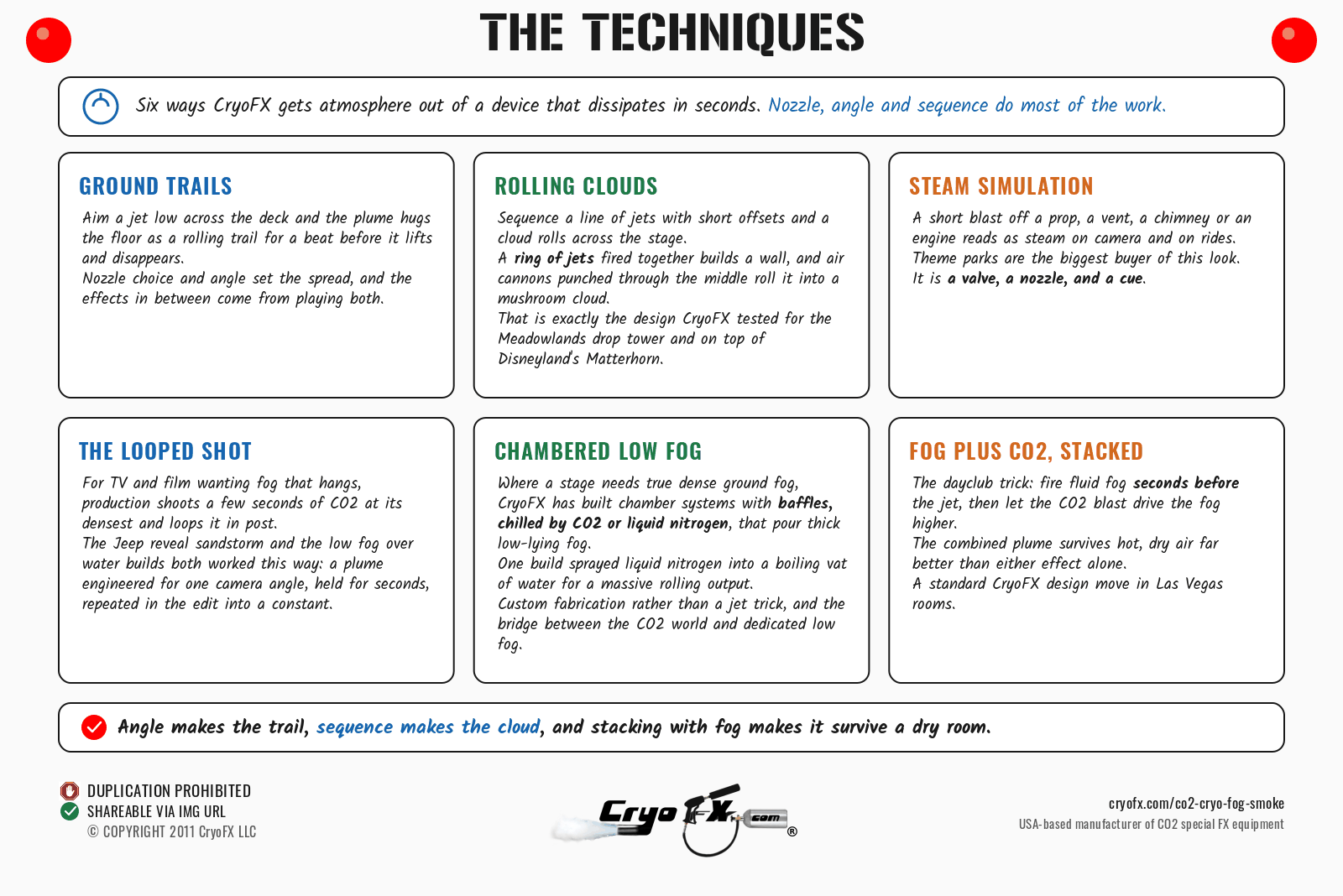
Ground trails. Aim a jet low across the deck and the plume hugs the floor as a rolling trail for a beat before it lifts and disappears. Nozzle choice and angle set the spread, and various effects in between come from playing both.
Rolling clouds. Sequence a line of jets with short offsets and a cloud rolls across the stage; a ring of jets fired together builds a wall, and air cannons punched through the middle of that ring roll it into a mushroom cloud, which is exactly the design CryoFX tested for the Meadowlands drop tower and on top of Disneyland's Matterhorn.
Steam simulation. A short blast off a prop, a vent, a chimney, or an engine reads as steam on camera and on rides. Theme parks are the biggest buyer of this look, and it's a valve, a nozzle, and a cue.
The looped shot. For TV and film wanting fog that "hangs," production shoots a few seconds of CO2 at its densest and loops it in post. The Jeep reveal sandstorm and the low fog over water builds both worked this way: a plume engineered for one camera angle, held for seconds, repeated in the edit into a constant.
Chambered low fog. Where a stage needs true dense ground fog, CryoFX has built chamber systems with baffles, chilled by CO2 or liquid nitrogen, that pour thick low-lying fog; one build sprayed liquid nitrogen into a boiling vat of water for a massive rolling output. That's custom fabrication rather than a jet trick, and it's the bridge between the CO2 world and dedicated low fog.
Fog plus CO2 stacked. The dayclub trick: fire fluid fog seconds before the jet, then let the CO2 blast drive the fog higher. The combined plume survives hot, dry air far better than either effect alone, and it's a standard CryoFX design move in Las Vegas rooms.
Where it's used
Theme park rides (tunnel blasts, volcano effects, animatronic steam), TV and film sets that can't trip alarms or leave residue, theatrical reveals where the stage has to clear instantly, stage productions layering CO2 over their existing atmosphere, and broadcast, where instant dissipation is the whole point: the effect fires, the moment lands, and the camera's next shot is clean.
The honest limit
CO2 cannot fill a room and hold it. Sustained atmospheric fill, beat-synced fog, haze for lighting beams: those jobs belong to fog machines, which cost far less per minute of output and are built to linger. The dividing question is dissipation. Gone in a second or two means CO2. Hanging for many seconds across dozens of cues means fog, a high-output fog unit, or a simulation CO2 jet, and the venue's smoke detection gets a vote, because fog-based effects can trigger it where CO2 never does.
The full effect-by-effect comparison, fog machines and simulation jets included, lives in the pillar's alternatives section within the CO2 jet atmospheric effects guide. Equipment for atmospheric builds, from standard jets to custom chamber systems, starts at the CO2 jets for sale catalogue.
The camera checklist
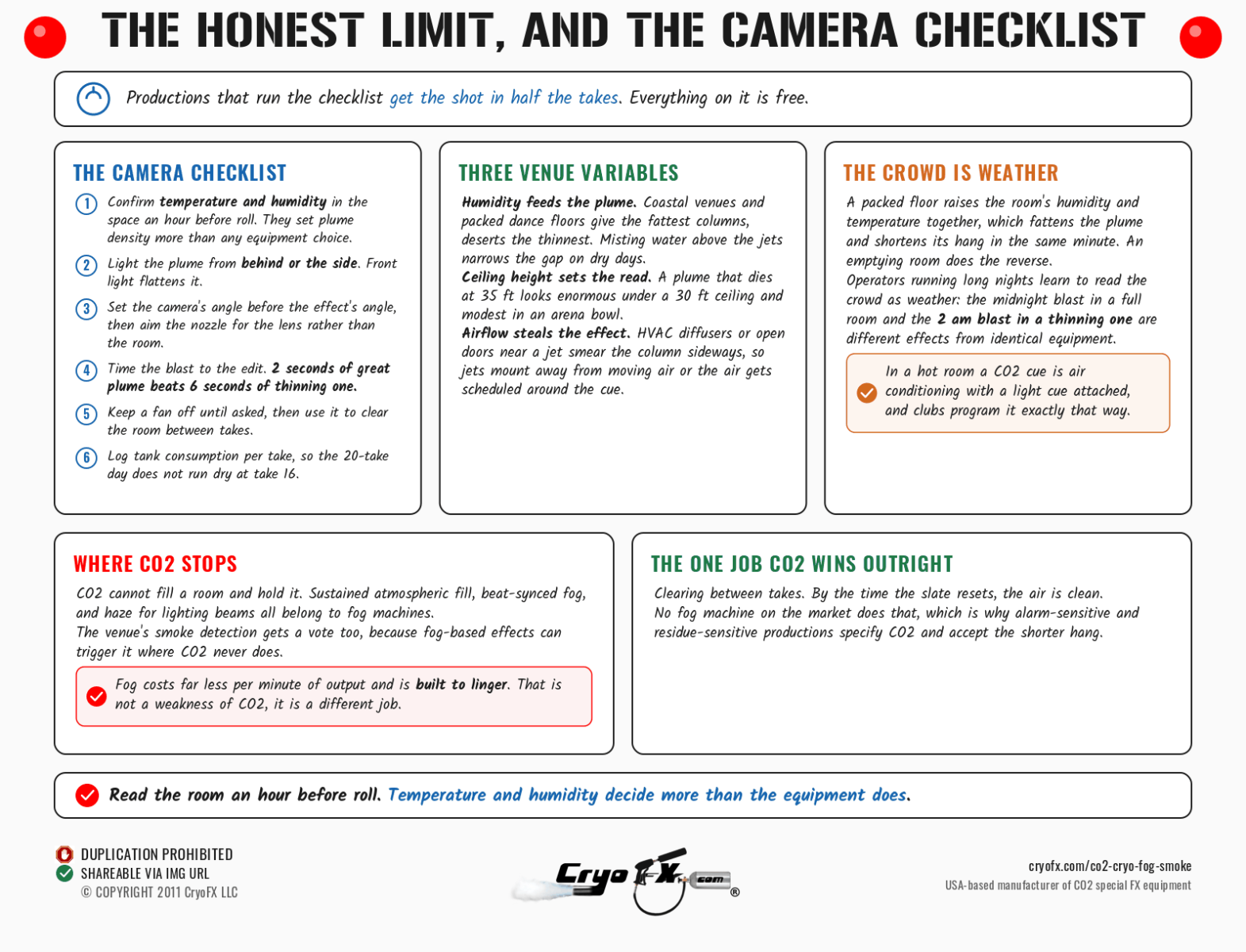
Shooting CO2 atmosphere well is a checklist, and productions that run it get the shot in half the takes. Confirm temperature and humidity in the space an hour before roll, because they set plume density more than any equipment choice. Light the plume from behind or the side; front light flattens it. Set the camera's angle before the effect's angle, then aim the nozzle for the lens rather than the room.
Time the blast to the edit: 2 seconds of great plume beats 6 seconds of thinning one. Keep a fan off until asked, then use it to clear the room between takes, which is the one job CO2 does faster than any fog: by the time the slate resets, the air is clean. And log tank consumption per take, so the 20-take day doesn't run dry at take 16.
Venue variables that change the look
The same jet reads differently room to room, and three variables explain nearly all of it. Humidity feeds the plume: coastal venues and packed dance floors (a sweating crowd raises the humidity right where the effect fires) give the fattest columns, deserts give the thinnest, and the atomizer trick of misting water above the jets narrows the gap on dry days. Ceiling height sets the read: a plume that dies at 35 ft looks enormous under a 30 ft ceiling and modest in an arena bowl.
And airflow steals the effect: HVAC diffusers or open doors near a jet smear the column sideways, so jets mount away from moving air or the air gets scheduled around the cue. The cooling effect on the crowd is part of the design too; in a hot room, a CO2 cue is air conditioning with a light cue attached, and clubs program it exactly that way.
Beyond CO2: the adjacent atmospheres
Because atmospheric requests rarely arrive alone, the same design conversations cover water effects (misting rigs, the 3,000 psi impaction-pin fog, water cannons for dayclubs) and snow and rain rigs for stage work, all of which CryoFX designs alongside the CO2. The reason to source them together is the control layer: one dedicated effects universe, one operator, one permit conversation where permits apply, and cues that interleave cleanly because one designer sequenced them. A smoke effect here, a cold blast there, and rain on the closer reads as one show rather than three vendors.
The last variable is the audience itself. A packed floor raises the room's humidity and temperature together, which fattens the plume and shortens its hang in the same minute, and an emptying room does the reverse. Operators running long nights learn to read the crowd as weather: the midnight blast in a full room and the 2 am blast in a thinning one are different effects from identical equipment, and the cue list that accounts for it looks better all night.
Frequently asked questions
Is CO2 fog real fog? It reads as fog and it's frozen humidity: moisture in the air flash-frozen by liquid CO2 at -78°C, thawing back out within seconds. No fluid, no residue, no lingering haze.
How long does CO2 fog last? Seconds. Cool humid air stretches it slightly; hot dry air erases it faster. Anything that needs to hang longer is a fog machine job.
Can a CO2 jet make low-lying fog? It makes low-lying looks: angled ground trails and rolling clouds that hold for a beat. True dense ground fog that sits comes from chambered systems CryoFX builds with CO2 or liquid nitrogen chilling, or from a dedicated low fog machine.
Does CO2 fog set off smoke alarms? No; CryoFX's own detector testing confirms it across every common sensor type. What it can trip is a CO2 safety monitor, which is a different sensor doing a different job.
Can CO2 be used for steam effects? Yes, and theme parks use it constantly: a short blast off a prop or vent reads as steam, repeats on every ride cycle, and leaves nothing behind.
Can CO2 fog be used on camera? It's one of the best camera effects there is: dense, bright white, instantly gone, alarm-safe, residue-free. For lingering looks, production shoots seconds of CO2 and loops the shot in post.
Should I use CO2 or a fog machine for atmosphere? Instant bursts that vanish: CO2. Sustained fill, haze, beat-synced atmosphere: fog. Hot dry rooms often use both, fog fired seconds early and lifted by the CO2 blast.
Updated - 09/06/2026.!